
CO₂ Reduction Measures
Reduction measures translate an emissions target into practical action. In the Reduction Planner, a measure represents a specific intervention expected to reduce emissions—for example, replacing a fuel source, improving energy efficiency, changing a purchased material or engaging suppliers.
A measure is not proof of a reduction on its own. It is a documented planning assumption that can be combined with other measures in scenarios and later compared with reported emissions data.
Targets, measures and scenarios
| Element | Purpose |
|---|---|
| Reduction target | Defines the emissions outcome to achieve by a defined year. |
| Reduction measure | Describes one action that is expected to contribute to that outcome. |
| Scenario | Combines selected measures to model a possible reduction pathway. |
Start with the target, then define the measures needed to achieve it. Use scenarios to test whether a realistic portfolio of measures closes the gap to the target.
Why reduction measures matter
A target without a credible set of measures is an ambition—not yet an implementation plan.
Well-defined measures help teams to:
turn a long-term target into concrete operational decisions;
identify the emission sources where action matters most;
clarify which reductions are committed and which still depend on decisions;
make investment, procurement and supplier-engagement needs visible;
test whether the current plan is sufficient before reporting a target as on track.
A practical planning discussion is usually more effective when it focuses first on five to ten decision-relevant measures instead of collecting every possible idea.
Add a reduction measure in the Reduction Planner
Open the relevant Reduction Plan.
Select the applicable target.
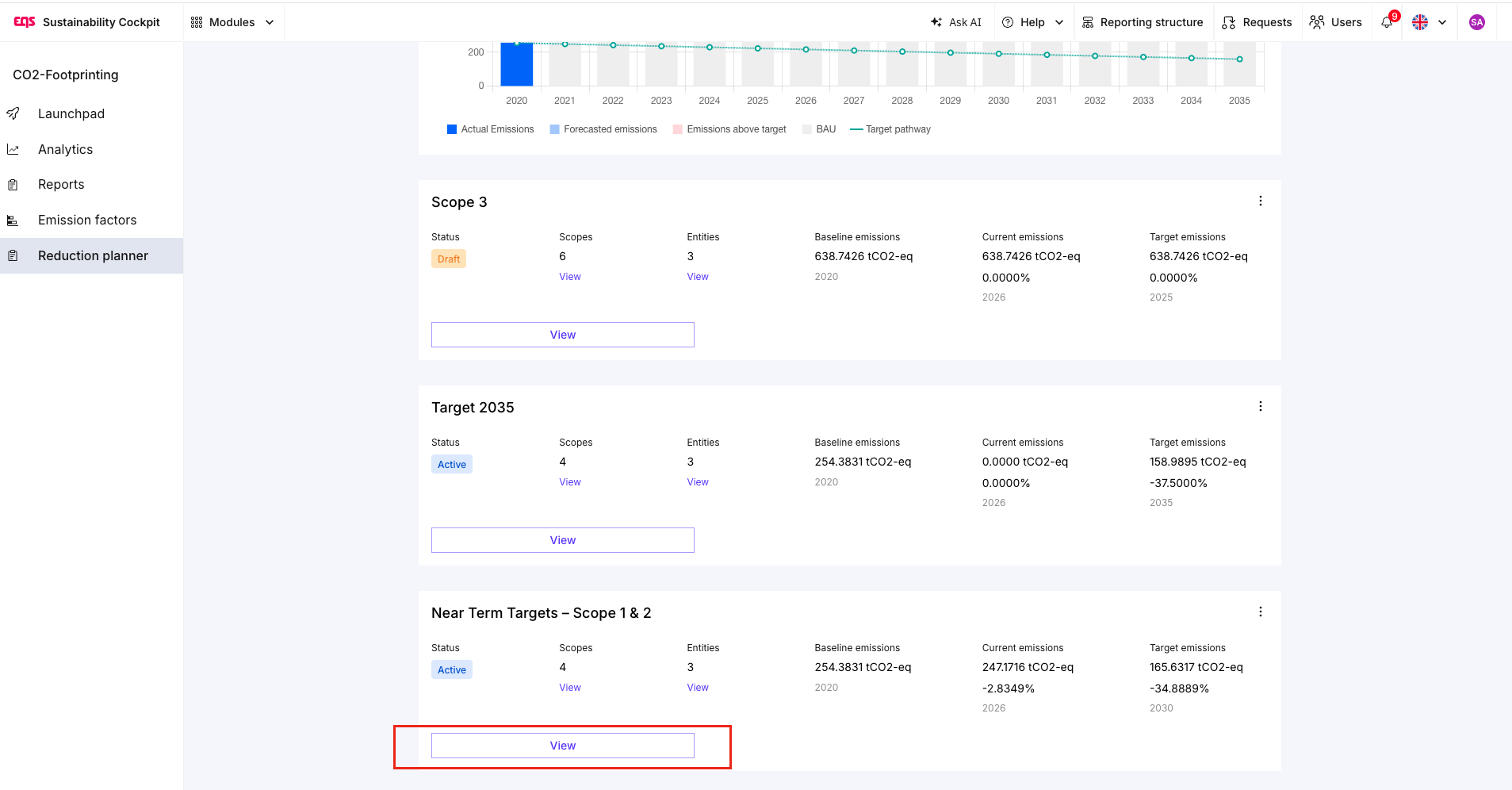
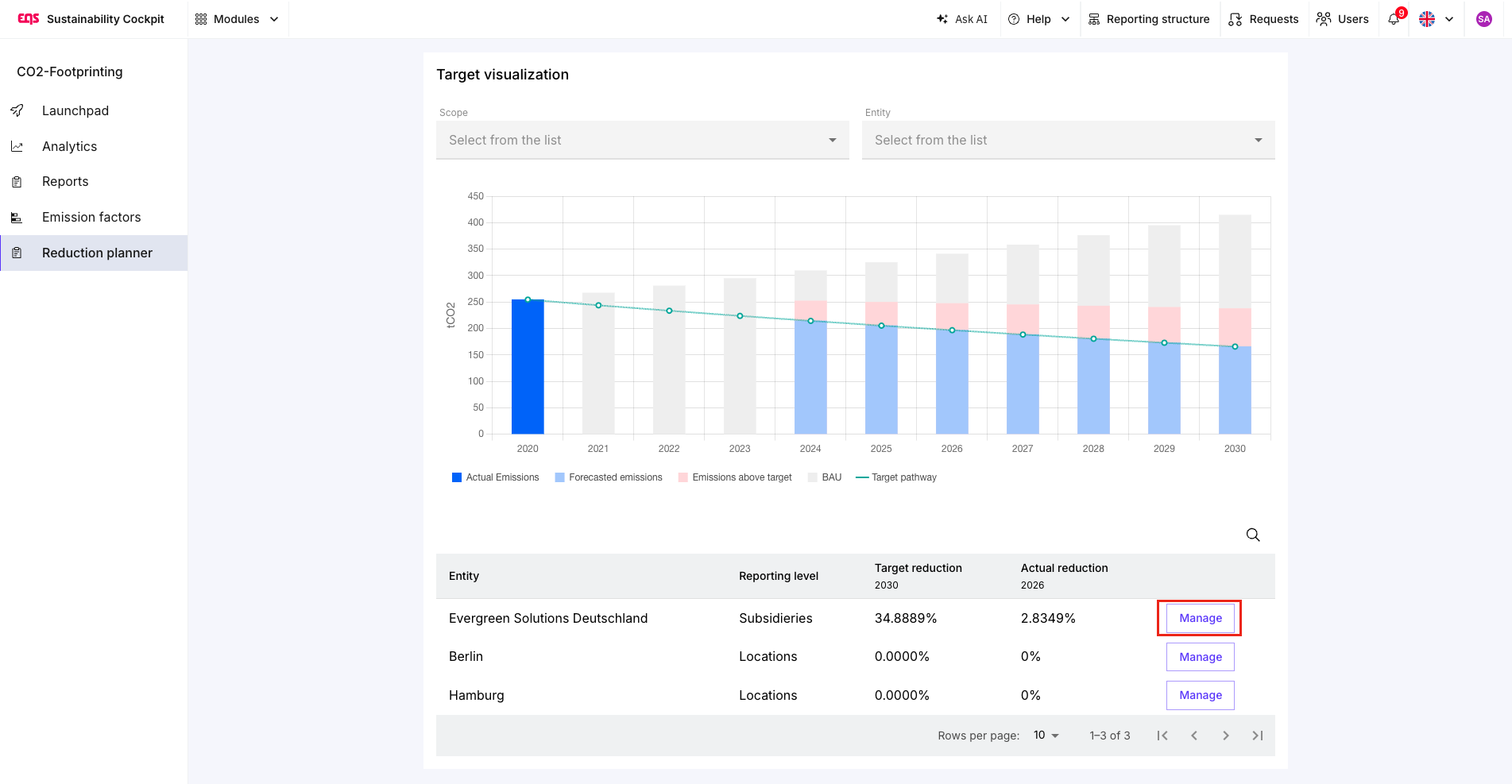
Open the relevant organisational unit and go to Measures & Scenarios.
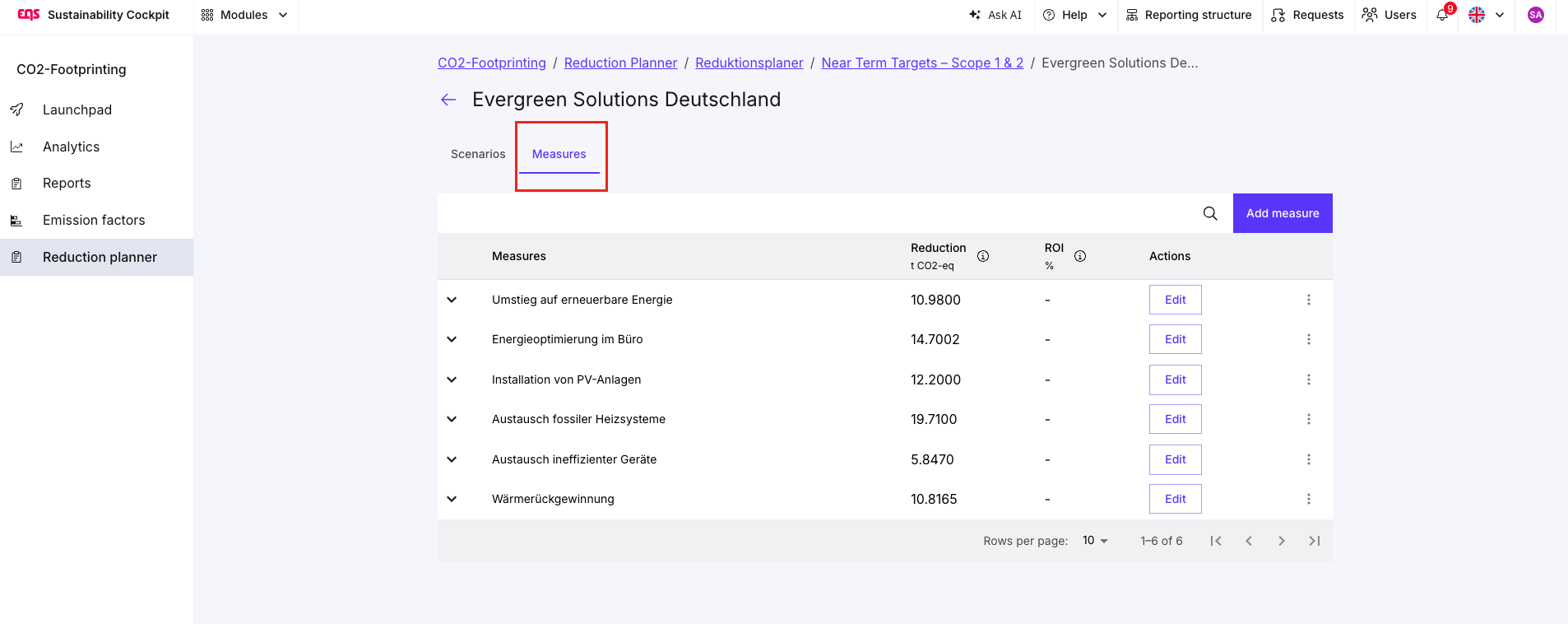
Create or select a measure from the Measure Library.
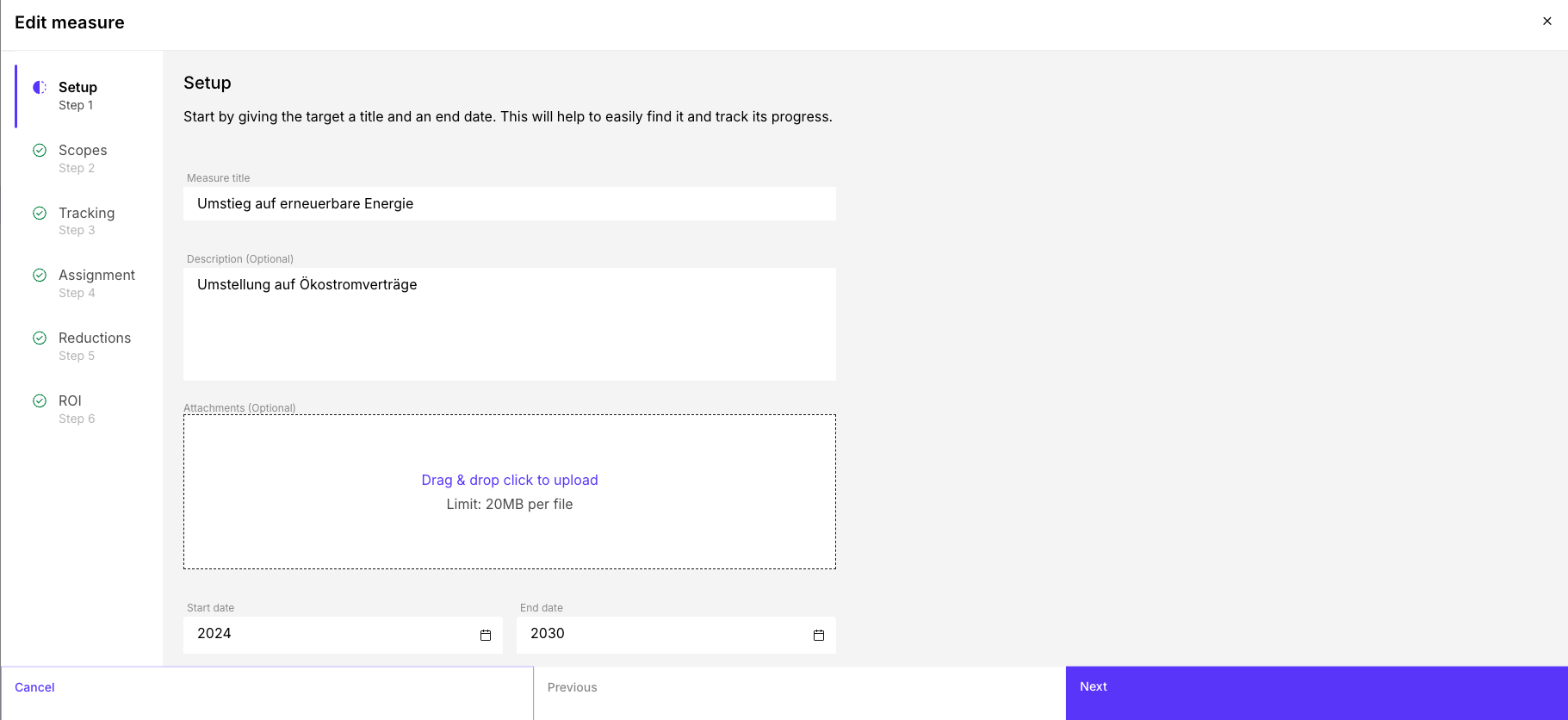
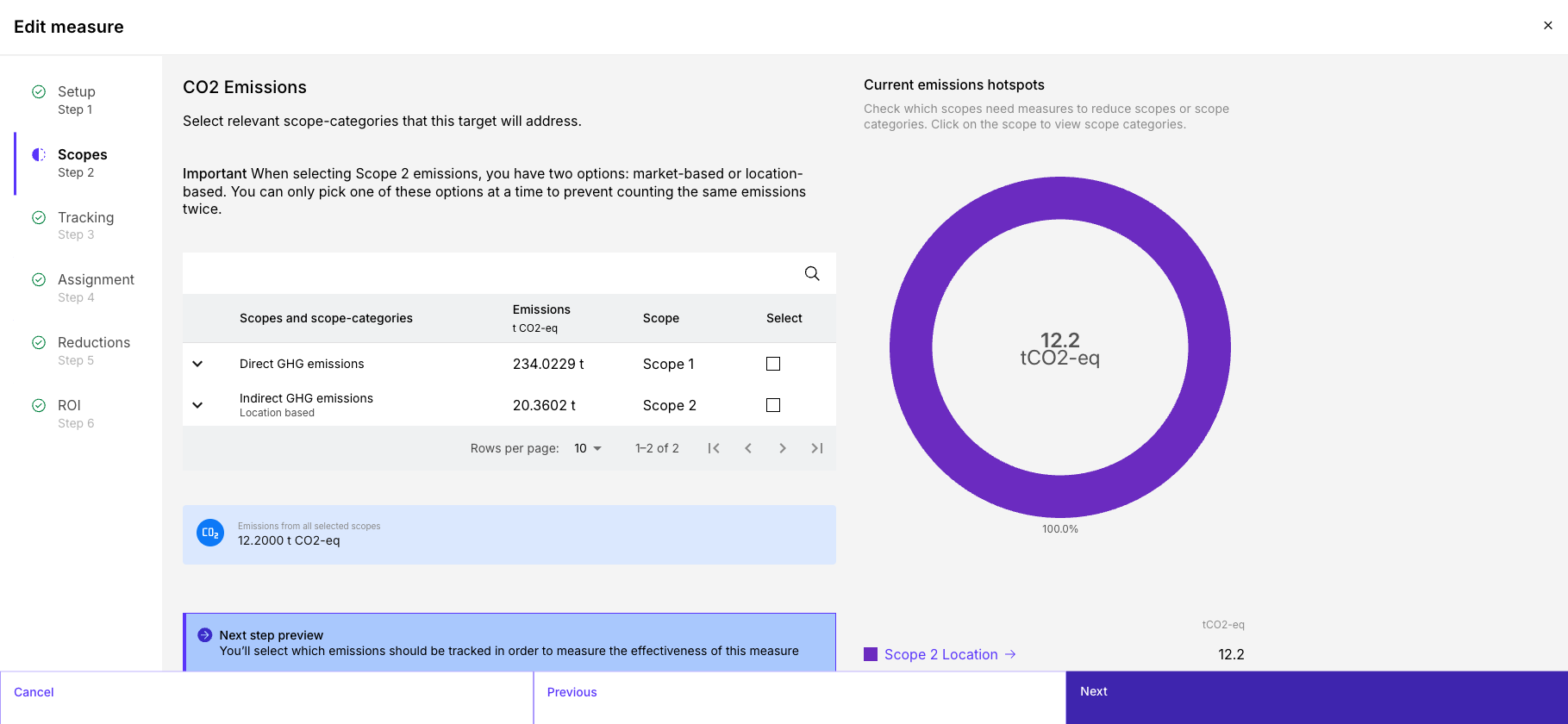
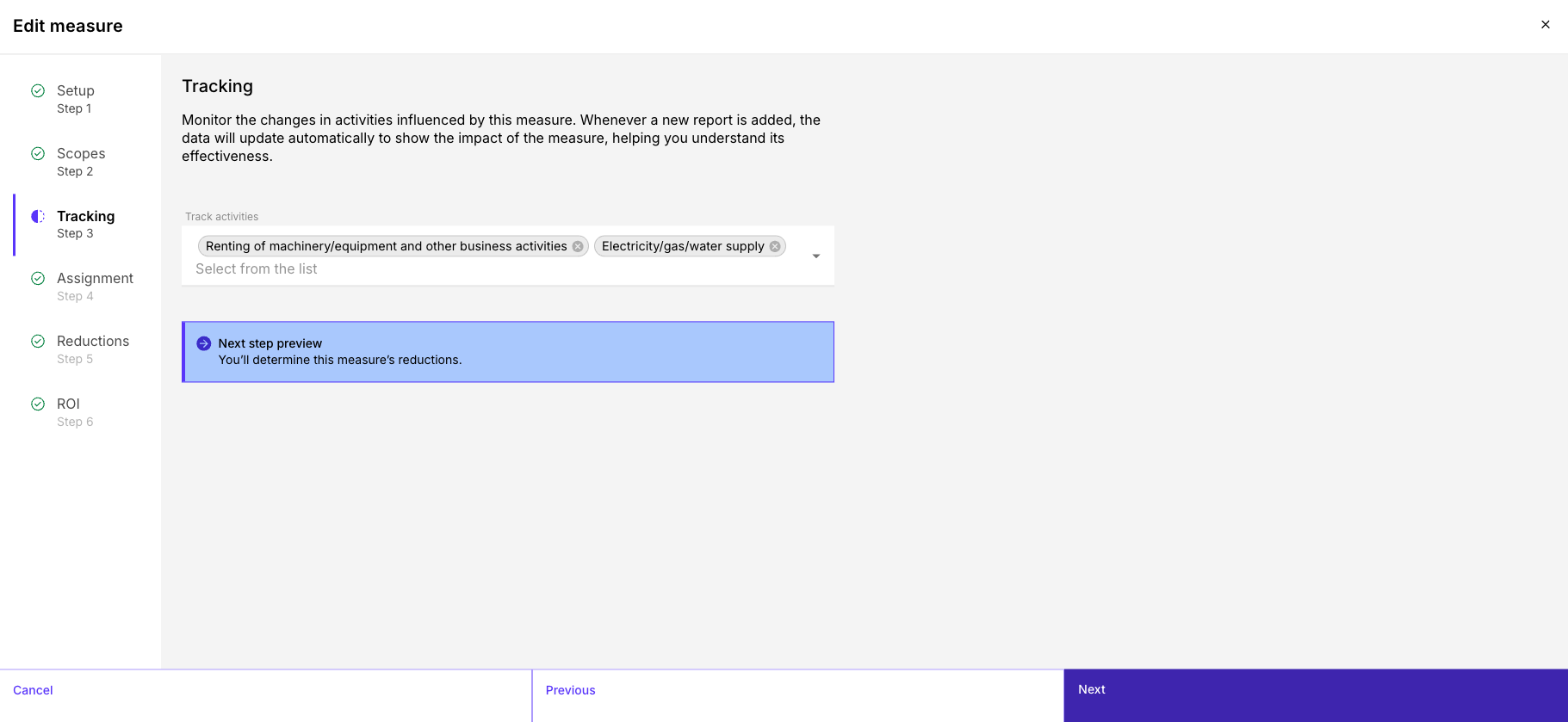
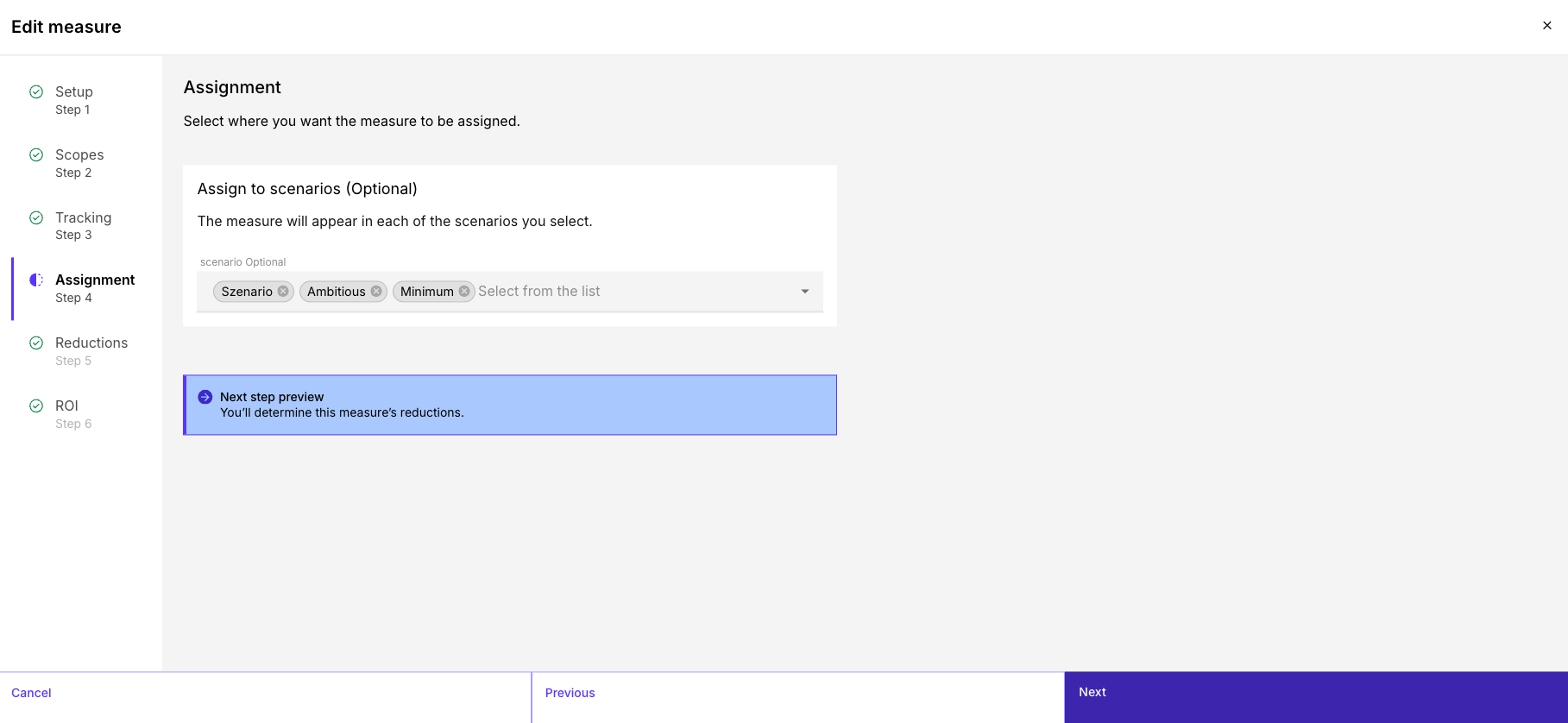
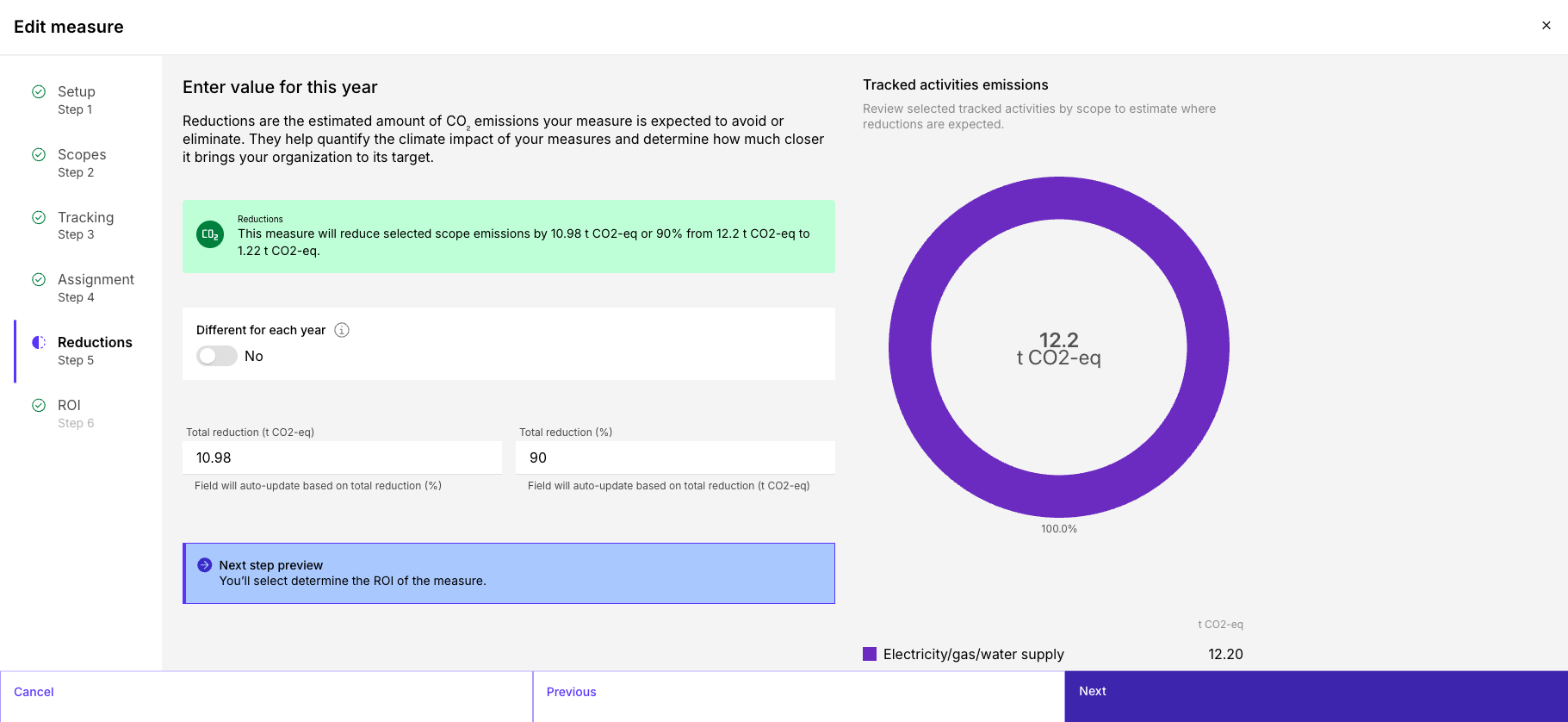
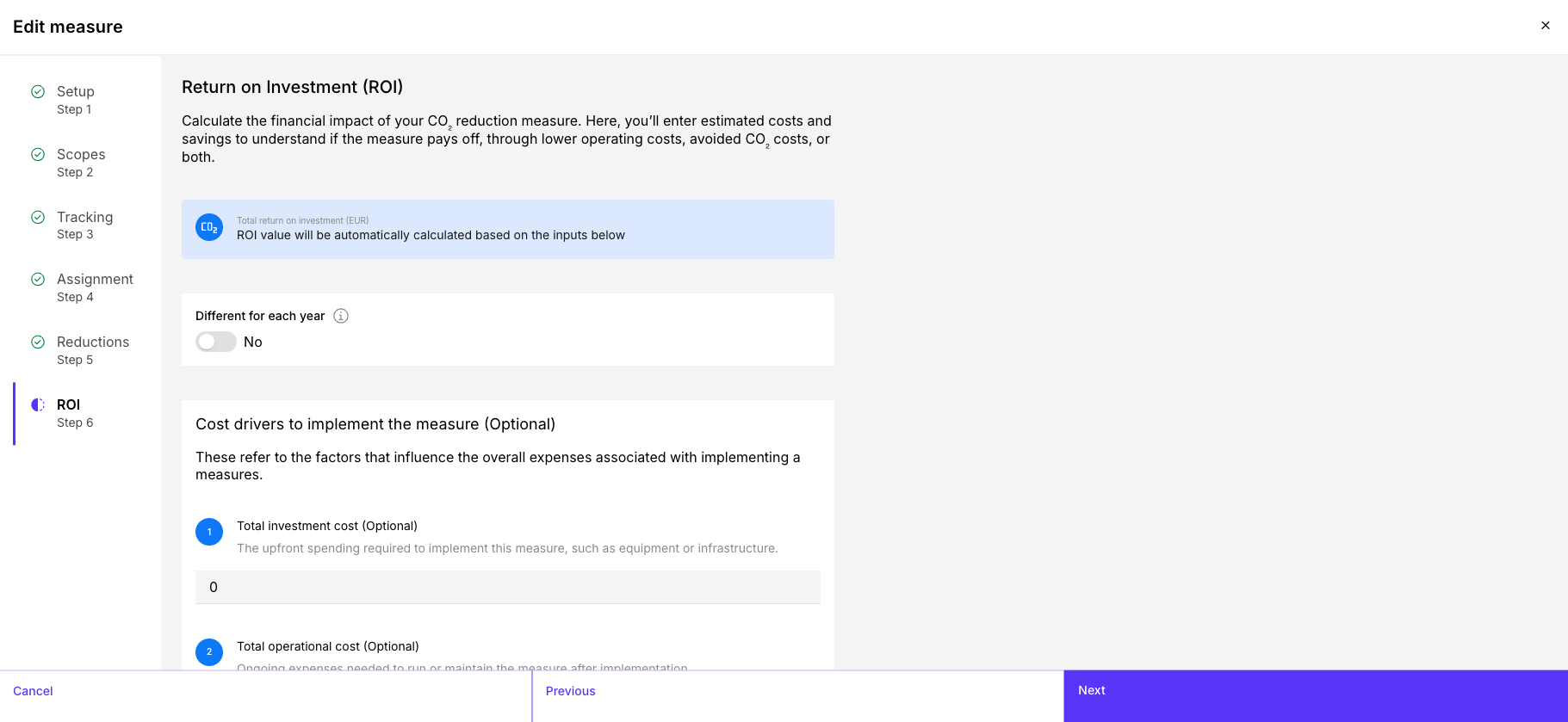
Connect the measure to the relevant activity where applicable.
Add the measure to one or more scenarios to test its contribution to the reduction pathway.
Measures can be created in the Measure Library, but their application is currently specific to a target and organisational unit. If the same intervention applies to another target or unit, it may need to be created or linked separately.
Define measures clearly and credibly
A useful measure should be specific enough for business owners to review and implement it. Record the rationale and assumptions behind each measure so they can be revisited when data or plans change.
| Include | Example |
|---|---|
| Intervention | Replace gas heating with heat pumps |
| Affected emission source | Stationary combustion in Scope 1 |
| Reduction mechanism | Less fossil fuel is combusted |
| Timing | Phased implementation from 2027 |
| Expected impact | Estimated annual reduction based on energy demand and replacement rate |
| Commitment status | Approved, planned, conditional or exploratory |
| Dependencies | Capital approval, site feasibility, electricity supply, supplier engagement |
| Evidence and assumptions | Engineering study, supplier data, pilot result or internal forecast |
Use precise names. “Reduce emissions” is not a usable measure description; “Convert 40% of the delivery fleet to electric vehicles by 2028” is.
Build a balanced portfolio of measures
Not every measure has the same certainty. Distinguishing between categories prevents a scenario from presenting an overly optimistic pathway.
| Type of measure | Meaning | How to use it in planning |
|---|---|---|
| No-regret measure | Low-risk action with a clear business case or limited dependency | Include in the core scenario |
| Committed measure | Approved or already being implemented | Include in the delivery scenario |
| Conditional measure | Plausible action that needs approval, funding or external conditions | Test in alternative scenarios |
| Strategic measure | Material long-term intervention with significant dependencies | Use to identify decisions and risks early |
For example, an energy-efficiency programme may be a no-regret measure, while a supplier transition to lower-carbon materials may be strategic and dependent on availability, cost and supplier readiness.
Avoid common planning errors
Do not treat every opportunity as committed. Clearly distinguish approved measures from ideas or aspirations.
Do not double count reductions. If two measures affect the same emissions source, assess whether their impacts overlap. For example, electrifying vehicles and procuring lower-carbon electricity should not each claim the full reduction from the same vehicle fuel use.
Do not rely on unsupported estimates. Document the assumptions, source data and timing behind the expected impact.
Do not confuse planned reductions with achieved reductions. Actual progress is determined by the company’s physical greenhouse-gas inventory and reported emissions.
Do not use market instruments as a substitute for direct emissions reductions. Where an action does not reduce emissions in the physical inventory, it should be identified and reported separately.
SBTi perspective
The Science Based Targets initiative (SBTi) considers actions that directly reduce emissions in a company’s physical greenhouse-gas inventory to be the primary basis for implementing targets. At activity level, this can include improving efficiency, changing inputs or technologies, adapting operational practices, and engaging suppliers or customers. SBTi’s implementation hierarchy prioritises these direct activity-level actions before more indirect approaches. SBTi: Target implementation
For target progress, annual tracking is essential. A company should assess whether the measures taken are reflected in its physical inventory, manage key dependencies and risks, and report other actions separately where they do not change that inventory. SBTi: Reporting and assessing target progress
For organisations following the SBTi Corporate Net-Zero Standard V2.0, reduction measures also form an important part of the transition plan: they make the path to target delivery, key actions and dependencies transparent. SBTi Corporate Net-Zero Standard V2.0: Executive summary
Review measures regularly
Review measures at least annually, and whenever relevant data, implementation plans or the underlying emissions baseline changes.
Use the review to answer:
Has the measure started as planned?
Are its assumptions still credible?
Has its scope, timing or expected impact changed?
Is the reduction visible in reported emissions data?
Does the scenario still close the gap to the target?
A Reduction Planner scenario supports structured decision-making. It does not by itself verify that a reduction has occurred or that a target is SBTi-compliant.
Frequently asked questions
Can I use one measure in several targets?
Measures are managed in the Measure Library, but their connection is specific to the relevant target and organisational unit. A separate link or measure may therefore be needed for another target or unit.
Does adding a measure change my target automatically?
No. The target remains the defined reduction objective. Measures and scenarios help model how that objective could be achieved.
What is the difference between a measure and a scenario?
A measure is one action. A scenario is a selected combination of measures used to model a reduction pathway.
Does a planned measure count as an achieved reduction?
No. A planned measure is an assumption for planning. Achieved progress must be assessed using actual reported emissions data.
Was this article helpful?
That’s Great!
Thank you for your feedback
Sorry! We couldn't be helpful
Thank you for your feedback
Feedback sent
We appreciate your effort and will try to fix the article